Personal tools

Knoepfler, Paul

Document Actions
Paul Knoepfler
Title:
Assistant Investigator
Office Address: 2425 Stockton Blvd
Sacramento, CA 95817
Office Phone:
(916) 453-2289
E-Mail Address: knoepfler (at) ucdavis.edu
Education: B.A. English Literature, Reed College, Portland, OR 1989
Ph.D. Molecular Pathology, UCSD, Mark Kamps Lab 1998
Post-Doc, Bob Eisenman Lab, Fred Hutchinson CRC
Research Papers: Click Here for Research Paper Links

Research Interests:

Enhancing our understanding of the role of stem cells in tissue growth, especially that of the nervous system, and developing safe and effective regenerative medicine therapies for Shriners Patients

Current Research:

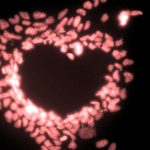
WHAT CONTROLS STEM CELL BIOLOGICAL BEHAVIOR? We are interested in answering this question about stem cells both during normal embryonic development but also during healing and regeneration. Further, we are analyzing how this control system goes awry during diseases such as developmental disorders and cancer. Our lab studies the molecular programming of embryonic and neural stem cells as well as cancer stem cells. For example, we are currently identifying the molecular mechanisms by which stem cells influence brain growth.

MYC IN STEM CELLS. We have found that a particular group of proteins called the Myc family appear to be master regulators of stem cell function. These Myc proteins are not only of critical importance for the ability of stem cells to do their normal "job" but also when the Myc genes are present at too high a concentration in stem cells they cause many human cancers. However we don't have a clear understanding of how Myc genes control the normal function of stem cells in development and regeneration nor how an excess of Myc leads to cancer. Therefore studying Myc's function in stem cells may provide critical clues as to how stem cells can be used in regenerative medicine as well as how to do our best to avoid cancer as a side effect from stem cell based regenerative medicine. Finally, these studies of Myc function should also help us to better understand human cancer in a more general sense, hopefully moving us one step closer to novel cures and prevention methods.

IPS CELLS. A final area of interest are induced pluripotent stem (iPS) cells, which represent a powerful new approach for future treatments of Shriners patients. iPS cells are a major advance in regenerative medicine, but many questions remain about these cells in terms of their properties, both positive and negative such as tumorigenicity. We are focused on addressing these and related open questions.


Noteworthy Publications:

TITLE
AUTHOR(s)
YEAR
DOWNLOAD
N-Myc regulates expression of pluripotency genes in neuroblastoma including lif, klf2, klf4, and lin28b. PLoS One 2009 4(6): e5799. Cotterman R and Knoepfler PS. 2009
HTML
PDF
Deconstructing stem cell tumorigenicity: a roadmap to safe regenerative medicine. Stem Cells 2009. 27(5): 1050-1056. Knoepfler PS. 2009
HTML
PDF
Journal Club. A cell biologist looks at the risk and promise of a new insight into stem cells and cancer. Nature 2009. 457(228):361. Knoepfler PS. 2009
HTML
PDF
Hematopoietic stem cell function and survival depend on c-Myc and N-Myc activity. Cell Stem Cell 2008. 3(6): 611-624. Laurenti E, Varnum-Finney B, Wilson A, Ferrero I, Blanco-Bose WE, Ehninger A, Knoepfler PS, Cheng PF, MacDonald R, Eisenman RN, Bernstein ID, Trumpp A. 2008
HTML
PDF
N-Myc regulates a widespread euchromatic program in the human genome partially independent of its role as a classical transcription factor. Cancer Research 2008. 68(23): 9654-9662. Cotterman R, Jin VX, Krig SR, Lemen JM, Wey A, Farnham PJ, and Knoepfler PS. 2008
HTML
PDF
Stem cells on the brain. Arch Neurology 2008. 65(3): 311-315. Knoepfler PS. 2008
HTML
PDF
N-Myc coordinates retinal growth with eye size during mouse development. Genes and Development 2008. 22(2): 179-93. Martins RA, Zindy F, Donovan S, Zhang J, Pounds S, Wey A, Knoepfler PS, Eisenman RN, Roussel MF, and Dyer, MA. 2008
HTML
PDF
Why Myc? An unexpected ingredient in the stem cell cocktail. Cell Stem Cell. 2008. 2(1):18-21 Knoepfler PS. 2008
HTML
PDF
Myc Stimulates Lymphocte Differentiation and Amplifies Calcium Signaling. 2007. In Press Journal of Cell Biology. Habib T, Tsang M, Moreno de Alboran I, Nicks A, Park H, Wilson L, Knoepfler PS, Andrews S, Rawlings D, Eisenman RN, and Iritani BM. 2007
In Press
Stem cells on the brain. Arch Neurology. 2007. In Press. Knoepfler, PS. 2007
In Press
N-Myc regulates Retinal Progenitor Cell Proliferation through p27Kip1. In Press, Genes and Development 2007. Martins RA, Zindy F, Donovan S, Zhang J, Pounds S, Knoepfler PS, Eisenman RN, Roussel MF, and Dyer, MA. 2007
In Press
N-Myc regulates skeleton size and is required for interdigital and joint cell death, but not proliferation in the developing limb. Development 2007. Ota S, Zhou ZQ, Knoepfler PS, and Hurlin PJ. 2007

Myc goes global: new tricks for an old oncogene. Cancer Research 2007. 67(11):5061-3. Knoepfler PS. 2007

Myc regulates global chromatin structure. Embo J 2006. 25(12): 2723-34. Knoepfler PS, Cheng PF, Zhang XY, Gafken P, McMahon SB, and Eisenman RN. 2006

N-Myc, p18Ink4c and p27Kip1 coordinately regulate cerebellar development. Proc Natl Acad Sci U S A. 2006, 103(31):11579-11583. (*co-first authors). Zindy F*, Knoepfler PS*, Xie S, Sherr CJ, Eisenman RN, Roussel MF. 2006

N-myc is an essential downstream effector of Shh signaling both during normal and neoplastic cerebellar growth. Cancer Res. 2006, 66 (17): 1-7. (*co-first authors). Hatton BA*, Knoepfler PS*, Kenney AM, Rowitch DH, de Alboran IM, Olson JM, and Eisenman RN. 2006

Neural precursor cycling at Sonic speed: N-Myc pedals, GSK-3 brakes. Cell cycle. 5(1): 47-52. Knoepfler PS, Kenney AM. 2006
HTML
Genomic Binding and Transcriptional Regulation by the Drosophila Myc and Mnt Transcription Factors. Cold Spring Harb Symp Quant Biol. 70:1-10. Orian A, Grewall SS, Knoepfler PS, Edgar BA, Parkhurst SM, and Eisenman RN. 2005
HTML
IPRM
2425 Stockton Blvd.
Sacramento, CA 95817
(916) 453-2290
Email the Webmaster